Epoxy Self-Levelling
Self-levelling epoxy and resin screeds for warehouses, showrooms, production halls and commercial interiors across Greater Accra — a flowing self-smoothing resin poured to a flat, seamless, glossy monolithic surface over a moisture-tested, diamond-ground slab, corrected for falls and finished with a chemical-resistant topcoat. Floor Experts Ghana — over 30 years of flooring expertise.
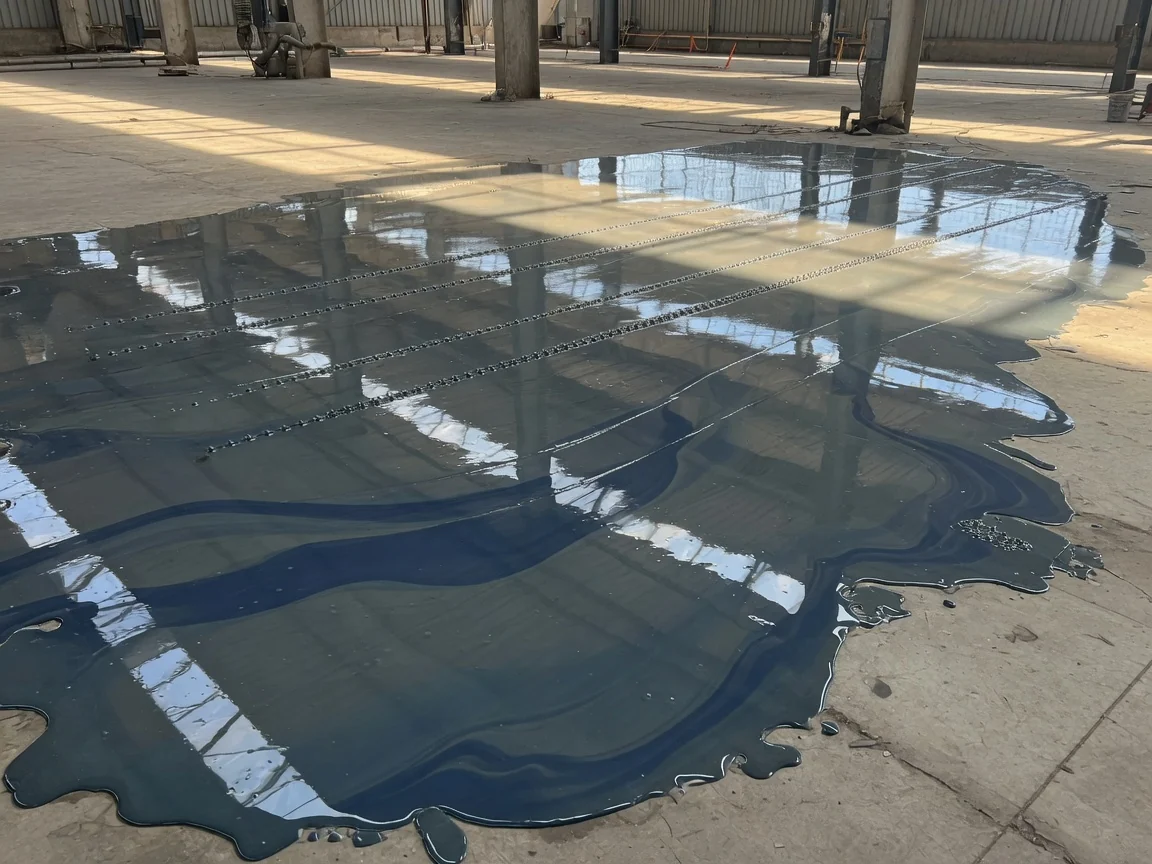
Epoxy self-levelling is the pouring of a flowing, self-smoothing resin screed that finds its own level to produce a flat, seamless, glossy and monolithic floor for warehouses, showrooms, production halls and commercial interiors across Greater Accra. Unlike a thin coating that follows every dip in the slab, a self-levelling screed pours out and levels itself, burying minor imperfection and delivering the premium flatness a showroom or clean production space demands. As with all resin work, the result is decided beneath the surface — by moisture control and preparation. Floor Experts Ghana has poured resin floors across Ghana for over 30 years.
Why Self-Levelling Floors Fail in Ghana’s Conditions — and How We Prevent It
A self-levelling floor fails for the same reasons any resin floor fails, plus two of its own: pinholing and outgassing. Because the screed is a sealed film poured over the slab, substrate moisture trapped beneath it builds osmotic pressure and blisters the floor — a persistent risk on Ghana’s ground-bearing slabs and in high humidity. And because the resin flows wet over the concrete, air outgassing from a porous, unprimed slab bubbles up through it and leaves a rash of pinholes as it cures.
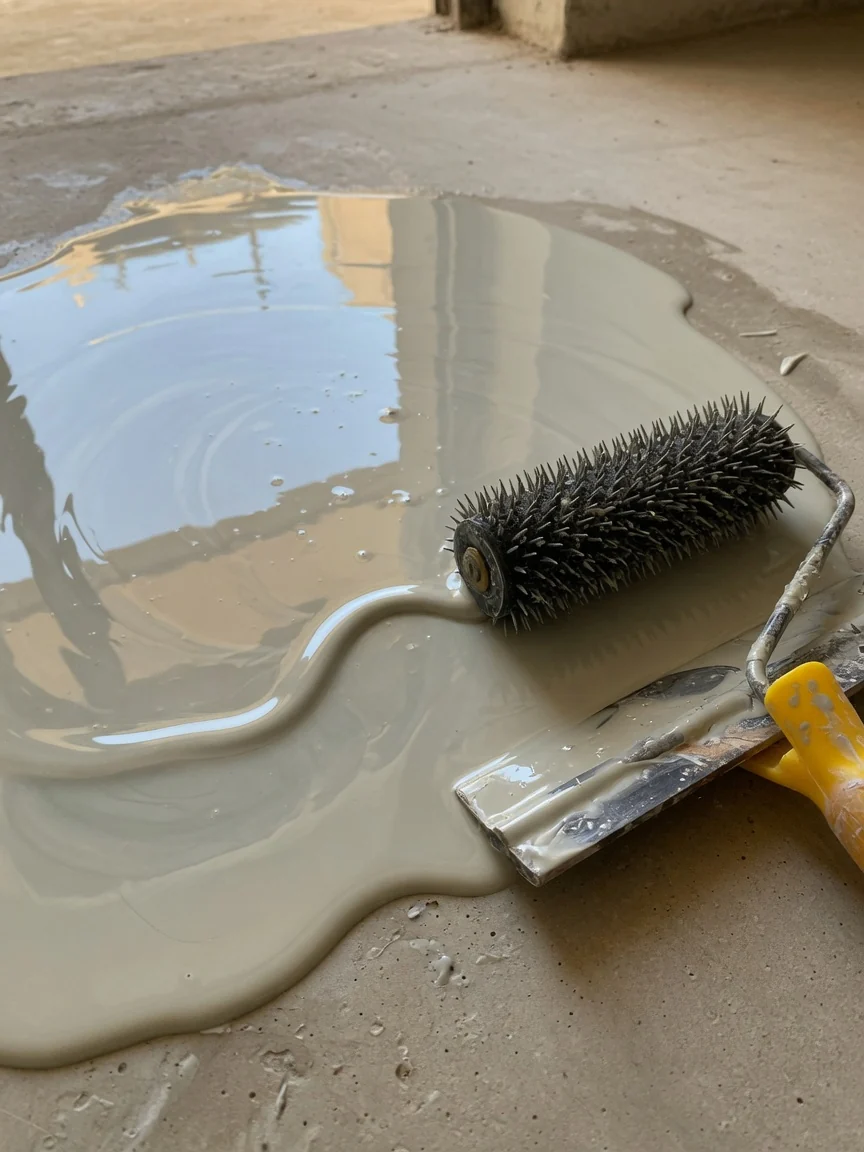
We control both at source. Every slab is moisture-tested and diamond-ground, then primed and, where porous, sand-blinded so air cannot outgas through the pour. The resin is power-mixed to the exact ratio, poured in a continuous wet edge and spike-rolled to release trapped air before it gels. That discipline is what separates a flat, pinhole-free monolithic floor from a blistered, pitted one.
Self-Levelling Systems We Pour in Accra
Self-Levelling Epoxy Screeds
A 2–3 mm flowing epoxy that levels to a flat, glossy, seamless surface for showrooms, warehousing, offices and commercial interiors — the standard specification where flatness and appearance both matter.
Decorative Flake & Quartz Broadcasts
A self-levelling base broadcast with coloured flake or quartz and sealed, for a hard-wearing decorative finish in showrooms, retail and public interiors.
Anti-Slip Self-Levelling
A self-levelling body with a controlled broadcast texture in the topcoat, giving flatness underfoot with the slip resistance a wet or busy area needs.
Conductive & Cleanroom Grades
Self-levelling systems specified as conductive or to cleanroom hygiene where the environment demands it — linking to our dedicated ESD systems.
The Self-Levelling Standards We Work To
| Standard / control | What it governs | Why it decides the floor |
|---|---|---|
| Substrate moisture testing | Slab dryness before pouring | Prevents blistering of the sealed screed from rising damp |
| Diamond grinding to CSP | Mechanical key | Removes laitance so the screed bonds and does not debond |
| Priming + sand-blinding | Outgassing control | Stops air rising from a porous slab and pinholing the wet resin |
| Correct mix ratio & pour temperature | Flow, cure & level | Ensures the resin self-levels and cures hard without soft spots |
| Spike-rolling | Air release | Releases entrained air so the finished surface is glass-smooth |
How We Pour a Self-Levelling Floor
- Slab survey, moisture test & datum — level, flatness and moisture assessed; finished-floor datum set.
- Diamond grinding & priming — laitance removed, surface primed and sand-blinded where porous.
- Mix & pour — resin power-mixed to ratio, poured in a wet edge, raked to thickness, spike-rolled.
- Topcoat & cure — chemical/abrasion-resistant topcoat and any anti-slip, held through full cure.
Self-Levelling vs Coating vs Screed
| System | Thickness | Levels the slab? | Best for |
|---|---|---|---|
| Roller coating | 0.3–0.8 mm | No — follows the slab | Light-duty sealing, dust-proofing |
| Self-levelling epoxy | 2–3 mm | Yes — flat plane | Showrooms, warehousing, offices, production |
| Heavy-duty screed | 4–9 mm | Trowel-levelled | Forklift traffic, thermal shock, wash-down |
What Affects the Cost
- The thickness required — a less-level slab needs more resin to reach a flat plane
- Grinding, priming and any substrate level or drainage correction
- Decorative flake/quartz, anti-slip texture and colour
- Area (m²), access, and whether the space stays partly in use during works
Every quote follows a site survey and slab moisture test — no fixed rate is given before the floor is assessed.
Applications Across Ghana
- Showrooms, retail and commercial interiors demanding a flat, seamless finish
- Warehousing and light industrial floors in Tema, Spintex and the Accra belt
- Production and assembly halls, laboratories and clean areas
- Offices and public interiors in decorative flake or quartz
Areas We Serve
Floor Experts Ghana pours self-levelling floors across Accra, Tema, Spintex, Kumasi and beyond — surveyed, prepared and guaranteed by a trusted Ghanaian contractor with over 30 years of flooring expertise.
Related Services
- Epoxy Floor Installation — full industrial and commercial resin systems
- ESD / Anti-Static Floors — conductive self-levelling for sensitive environments
- Concrete Floor Installation — power-floated and polished concrete substrates
- Floor Maintenance & Repair — recoating and repair of resin floors
Frequently Asked Questions
What is the difference between a self-levelling epoxy and an epoxy coating? A coating is a thin roller film that follows the slab’s dips; a self-levelling epoxy is a thicker flowing screed that pours out and finds its own level for a genuinely flat, seamless surface. Self-levelling is specified where flatness and finish matter.
Can a self-levelling floor fix an out-of-level slab? Within limits, and only if planned — it removes surface undulation and gives a flat plane but flows to horizontal and is not a structural repair. Big level corrections or drainage falls are addressed in the substrate first.
Why does a self-levelling floor get pinholes or blisters? Pinholes from air outgassing through a porous slab; blisters from substrate moisture under the film. We moisture-test, prime and sand-blind, and spike-roll the pour to prevent both.
How much does a self-levelling epoxy floor cost? Quoted on survey — driven by thickness needed, grinding and priming, substrate correction, topcoat and anti-slip, area and access.